The Problem
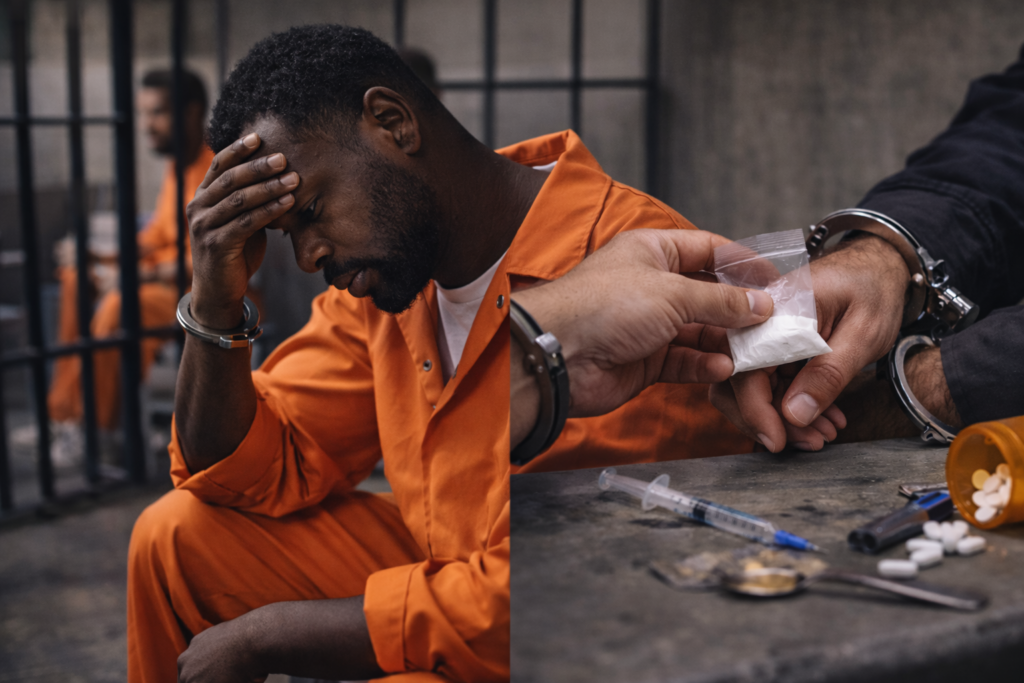
Incarceration is often framed as a solution to substance use, remove access, impose consequences, and risk will decrease. But emerging evidence and lived clinical experience tell a different story. For many individuals, particularly Black Americans, incarceration does not reduce substance use risk. It increases it.
Why It Matters
Longitudinal research shows that incarceration predicts illicit drug use even after controlling for prior substance use. This finding challenges deeply held assumptions in medicine, policy, and the criminal legal system. In this episode of The Transformed Mind, forensic and addiction psychiatrist Dr. Jason Barrett explains why this relationship exists, and why it is not surprising.
Incarceration disrupts nearly every protective factor associated with recovery: housing, employment, family stability, health care, and continuity of treatment. Many incarcerated individuals receive no evidence-based addiction treatment at all. Others experience abrupt medication discontinuation. Upon release, people often return to heavily policed environments with no insurance, unstable housing, and untreated trauma. Under these conditions, relapse is not a failure of will, it is a predictable outcome.
Key Takeaways
- Incarceration functions as a risk factor, not a deterrent, for substance use
- Substance use often serves a purpose, including coping with trauma, untreated psychiatric illness, or chronic stress
- Court-mandated treatment does not equal readiness for change
- Relapse after release reflects systemic gaps, not moral weakness
- Clinicians play a critical role by asking better questions and maintaining continuity
Beyond the Mic
This conversation extends beyond addiction medicine. It raises urgent questions about how society defines accountability, care, and public safety. Treating addiction as a behavioral problem rather than a chronic medical condition perpetuates harm, especially when treatment is withheld during incarceration. Just as we would never stop insulin for diabetes, we should not discontinue evidence-based addiction care.
True recovery requires more than medication. It requires community partnerships, peer support, housing access, policy reform, and clinicians willing to meet people where they are. The evidence is clear: incarceration without treatment does not save money or lives, it shifts harm downstream.
Featured Resources
- Rich JD, Wakeman SE, Dickman SL. Return to illicit drug use post-incarceration among formerly incarcerated Black Americans. Drug Alcohol Depend. 2018;187:77–82.
- Brinkley-Rubinstein L. Incarceration as a social determinant of health. Lancet Public Health. 2018;3:e165–e166.
- Binswanger IA, et al. Mortality after prison release. N Engl J Med. 2007;356:157–165.
→ Listen to the full episode on The Transformed Minds FULL EPISODE
Stay ready. Stay aware. Stay grounded.