Based on the systematic review “Management of Xylazine Toxicity, Overdose, Dependence, and Withdrawal” by Owusu et al.
Xylazine, also known as “tranq,” is rapidly emerging in the illicit opioid supply, especially alongside fentanyl. Once confined to veterinary medicine, this sedative is now showing up in overdose cases across the United States.
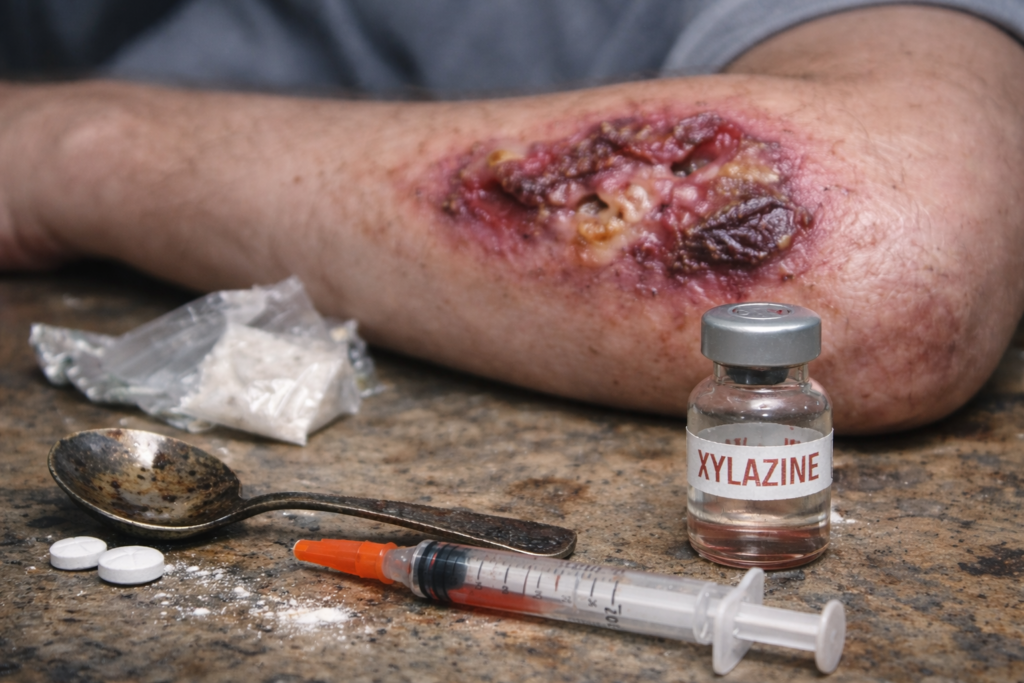
Unlike opioids, xylazine is not reversed by naloxone, and there’s no approved antidote. The result? Prolonged sedation, respiratory depression, and deep necrotic ulcers that are often mistaken for infections. Frontline clinicians are increasingly encountering cases they were never trained to recognize.
Why It Matters
Xylazine complicates every stage of overdose management, from the ER to outpatient follow-up. Patients often present with hypotension, bradycardia, and poor response to naloxone. Without timely recognition, care becomes fragmented, and patients fall through gaps in the system.
Our recent systematic review offers the first synthesis of xylazine toxicity, withdrawal, and management strategies to guide clinicians on the frontlines of this evolving crisis.
Key Takeaways
- Not an opioid: Naloxone will not reverse xylazine, but use it if opioids are suspected.
- Classic signs: Persistent sedation, bradycardia, and leg ulcers unresponsive to antibiotics.
- Treatment: Airway support, IV fluids, atropine for bradycardia, and early wound care with silver sulfadiazine.
- Withdrawal management: Use clonidine or lofexidine; plan for co-occurring OUD treatment with buprenorphine.
Clinical Pearl:
When naloxone fails and bradycardia with ulcers persists, suspect xylazine.
Beyond the Mic
Xylazine is more than a clinical puzzle; it’s a mirror reflecting broader system gaps: underfunded addiction care, stigma in emergency settings, and a reactive rather than preventive public health approach. By recognizing xylazine early, clinicians not only save lives but also open a doorway to engagement, wound healing, and recovery. Awareness is the first antidote we have.
Featured Resources
- Systematic Review: Owusu et al., “Management of Xylazine Toxicity, Overdose, Dependence, and Withdrawal”
- Training Tool: NY Overdose Prevention & MATTERS resource list
- Clinical Reference: CDC xylazine fact sheet
Listen to the episode: Tranq Alert – What Every Clinician Should Know About Xylazine on the Transformed Minds Podcast. FULL EPISODE
Stay ready. Stay aware. Stay grounded.