The Problem
Addiction medicine often focuses on medications, clinical visits, and treatment protocols. But what happens when the barriers to recovery exist outside the clinic walls?
In this episode of The Transformed Minds, Dr. Edwin Chapman, a physician specializing in internal and addiction medicine, challenges the traditional boundaries of healthcare. After more than 40 years practicing in Washington, D.C., he argues that treating opioid use disorder requires far more than prescribing medication.
His framework, the Urban Health Model, centers on a simple but often overlooked truth: most health outcomes are determined by social conditions, not clinical care alone. Housing stability, community support, economic opportunity, and safety often determine whether treatment succeeds or fails.
Why It Matters
Research across public health and medicine consistently shows that roughly 80% of health outcomes are influenced by social determinants of health, factors like housing, food security, employment, and community stability. For individuals with opioid use disorder, these determinants are not background variables; they are central drivers of risk.
Dr. Chapman highlights stark realities from Washington, D.C.:
- Over 90% of overdose deaths occur among African American residents in some communities.
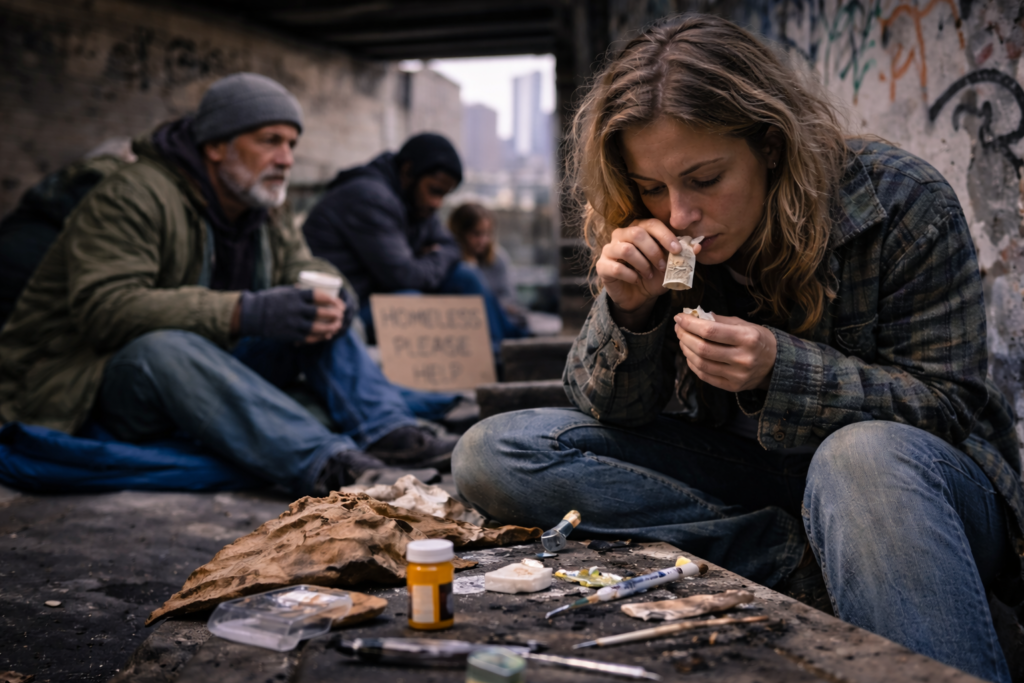
- Approximately 30% of overdoses occur among individuals experiencing homelessness.
Without addressing housing instability and basic survival needs, even the most evidence-based medical treatments struggle to succeed. The question becomes not simply how to treat addiction, but how to create conditions where treatment can work.
Key Takeaways
- Treat the whole person. Effective addiction care must address medical conditions alongside housing, food access, safety, and community stability.
- Housing is healthcare. When individuals lack shelter or safety, managing medications or attending appointments becomes secondary to survival.
- Community partnerships matter. Dr. Chapman emphasizes collaboration with faith communities and local organizations to reconnect medicine with the neighborhoods it serves.
- Structural conditions drive health outcomes. Economic downturns, job loss, and community disinvestment correlate with rising rates of overdose, alcoholism, and child welfare involvement.
- Healthcare systems shape survival. A fragmented, for-profit healthcare system often limits access to the very treatments that save lives.
Beyond the Mic
One of Dr. Chapman’s central arguments is both ethical and practical:
Healthcare should be treated as a basic human right.
When systems prioritize profit over access, the consequences become visible in overdose statistics, health inequities, and untreated illness. The United States currently has one of the highest overdose death rates globally, despite having some of the most advanced medical technologies. At the same time, the country ranks poorly among developed nations in healthcare access and equity. Dr. Chapman’s Urban Health Model challenges the idea that medicine alone can solve these problems. Instead, he calls for reintegrating healthcare with community infrastructure, including housing initiatives, faith organizations, and local support networks.
Featured Resources
- World Health Organization, Social Determinants of Health Framework
- National Academies of Sciences, Integrating Social Care into Healthcare Delivery
- National Institute on Drug Abuse, Social Determinants and Substance Use
→ Listen to the full episode on The Transformed Minds FULL EPISODE
Stay ready. Stay aware. Stay grounded.