The Problem
Treating opioid use disorder (OUD) is often framed as a purely medical challenge. But for many patients, the barriers to recovery extend far beyond medication or clinic visits.
In Part 2 of the episode of The Transformed Minds with Dr. Edwin C. Chapman, he explains why effective treatment must address social conditions, economic realities, and biological vulnerability at the same time.
People with OUD frequently navigate overlapping challenges, limited access to mental health care, housing discrimination, employment barriers, and interactions with the criminal legal system. These pressures create a treatment landscape where recovery requires more than clinical intervention. Dr. Chapman argues that lasting solutions require a holistic approach that integrates medicine, community support, and structural change.
Why It Matters
Evidence-based medications for opioid use disorder exist and are highly effective, yet access remains inconsistent. One of the most important medications, buprenorphine, significantly reduces overdose risk and supports long-term recovery.
Buprenorphine works as a partial opioid agonist, meaning it activates opioid receptors enough to reduce withdrawal and cravings while limiting respiratory depression and euphoria. It also blocks the effects of other opioids, lowering the risk of fatal overdose.
Despite strong scientific evidence supporting medication-assisted treatment, systemic barriers persist. In some cases, policies shaped by profit incentives, particularly within incarceration systems, have historically restricted access to treatment. At the same time, addiction science continues to show that biological and genetic factors influence vulnerability to substance use disorders, including differences in metabolism and overdose risk. These insights have led to evolving treatment guidelines, including adjustments in medication dosing for individuals who metabolize medications more rapidly.
The takeaway is clear: addiction is not a single-cause problem, and treatment cannot rely on a single solution.
Key Takeaways
- OUD is shaped by structural barriers. Limited mental health services, housing discrimination, employment challenges, and criminal legal involvement often complicate recovery.
- Medication saves lives. Buprenorphine is an FDA-approved treatment that reduces overdose risk and supports long-term recovery through its partial agonist properties.
- Peer support builds trust. Individuals with lived experience play a critical role in encouraging treatment engagement and sustaining recovery.
- Treatment benefits communities economically. Expanding access to OUD treatment reduces healthcare costs related to HIV, hepatitis C, emergency care, and incarceration.
- Genetics influence vulnerability. Biological differences, including metabolism and inherited risk factors, affect how individuals experience addiction and respond to treatment.
- Holistic care improves outcomes. Addressing housing, food access, family history, and community conditions strengthens recovery pathways.
Beyond the Mic
Dr. Chapman frequently returns to a powerful idea: recovery is a community process.
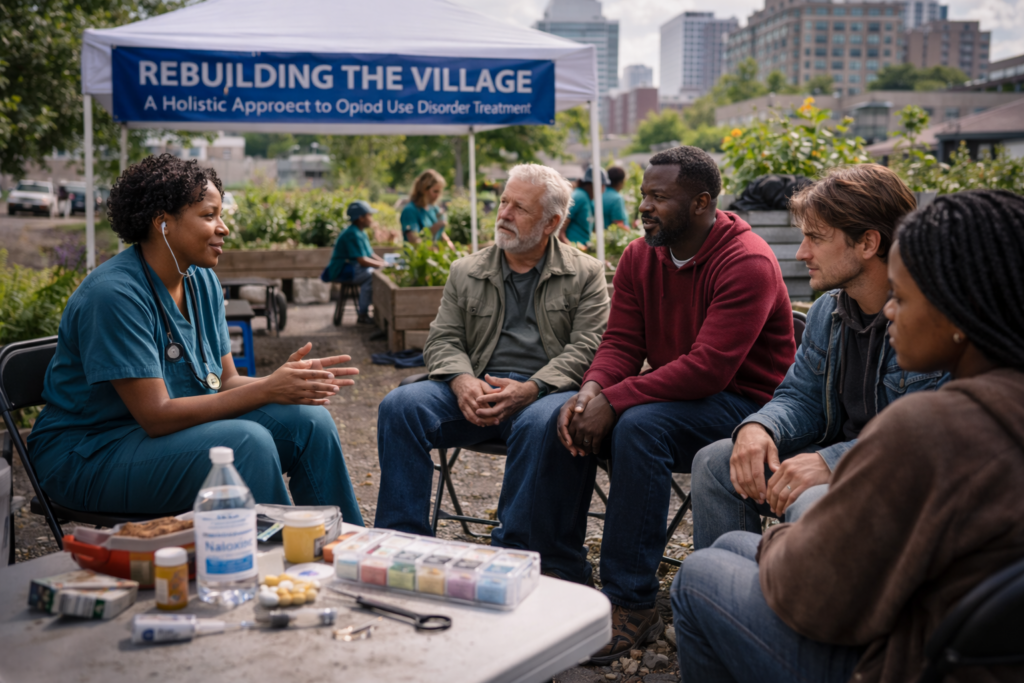
Medicine plays a critical role, but long-term healing depends on supportive environments where people have access to housing, stable employment, family connections, and healthcare. He describes this vision as “rebuilding the village.” In this model, clinicians, community organizations, faith groups, peer mentors, and public health systems work together to support individuals navigating recovery.
When treatment systems recognize the full complexity of addiction, biological, social, and economic, they create pathways not just for survival, but for long-term stability.
Featured Resources
- National Institute on Drug Abuse, Medications for Opioid Use Disorder
- Substance Abuse and Mental Health Services Administration, Buprenorphine Treatment Information
- National Academies of Sciences, Medications for Opioid Use Disorder Save Lives
→ Listen to the full episode on The Transformed Minds FULL EPISODE
Stay ready. Stay aware. Stay grounded.